The Need to Choose

Writing’s biggest challenge?

Writing any book-length work is a deep dive into complete freedom. You have utter freedom because the blank page holds limitless possibility.

Aside from genre requirements (thrillers need good pacing and high stakes, romances need a Happily Ever After—or a Happily For Now), you can tell the story using any character you choose to invent, going through any set of experiences you can devise, in any environment you can design.

A superintelligent banana piloting a spaceship? Yes. A bad father running away from his son? Sure. A veteran of two wars founding an organic farm? Absolutely. The only job you have as the writer is to make it work. To rephrase that, you have only one job as a writer, and that’s to make the reader turn the page.

The hard part is decision fatigue

This is where it gets tricky. Getting the reader to turn the page involves many decisions, and making these decisions—even knowing what these decisions are—can take an extraordinary amount of time and anguish if you’ve never done it before.

If you have been afraid of making the wrong decision when you work on your project, rest assured:

You will make plenty.

They will be obvious later.

They will show you the way.

Every decision you make sends you further along a particular path. Once you decide your hero’s a banana, you can’t have him doing tasks that require arms. Once you decide the son is nine, you can’t give him the ability to buy a plane ticket and chase his delinquent father across the globe. You have to work with the situation and the characters you’ve set up.

But there’s no alternative, so get in there and do it!

Making no decisions would be like trying to create a sculpture of “everything”—it can’t be done. When creating any piece of art—painting, sculpture, ceramics, textiles, dance, theatre—you have to choose, narrow things down and decide what to include in the thing you’re making.

Taking a long time to choose doesn’t make for better choices. So give it a bit of thought, then choose and see what happens. Decisiveness saves you time, and time is one of the writer’s biggest allies.


8 Billion Shades of Gray

The Power of Voice

If you’ve ever submitted anything for publishing, you already know that a ‘meh’ piece of work is unlikely to get into print. Literary mags get far more submissions than they can fit into a few issues a year. Agents and publishers get far more manuscripts than they can read in ten lifetimes.

The biggest single antidote to a meh reading experience is creating a compelling voice—whether it’s fiction or nonfiction.

Back in 2016 or so I sent the third draft of a complete novel to my agent. I thought I’d told a pretty good story. Then we talked about it, and she said it was, you know, okay. She liked the characters. But she didn’t love the manuscript enough to be able to sell it. It lacked oomph.

I knew immediately what she meant, and she was right. I hadn’t dug deep enough into the POV character’s psyche. I was holding back. This made for a boring reading experience. The novel’s voice was not compelling enough to carry the reader through the story, and the story wasn’t compelling enough to make up for a pedestrian voice.

So What About the 8 Billion Shades?

The other  morning I got dressed in gray pants, a gray tank top, a gray button-down shirt, and gray socks. I was halfway to work when I looked down and realized that none of the grays matched. They weren’t even close. One had more blue, one had a pink cast, and one was greenish-gray. Considering they were all the “same” color, they couldn’t have been more different.

This is true also of the nearly 8 billion humans on planet earth: There are no identical views on life. There isn’t even a broad consensus on what constitutes reality. If you could somehow transport into another person’s head, let’s say someone in the same socioeconomic group, in the same town, with the same job as you–heck, let’s imagine they share your partner and kids!–you cannot really know their experience.

That’s because everyone has their own way of experiencing the world. Anyone who believes other people think exactly the same way they do is doing what the psychologists call “projecting.”

If we could really get inside each other’s heads, we would understand that each person’s way of perceiving and deciding is a completely individual experience.

It’s the same with voice

You might have five novels with the same characters and plot (what happens, in what order, from whose POV). Or five memoirs, five essays, five transformational self-help books on the same topic.

Even if the writers have the same skill level and information and approach to the book’s elements, each book will be different because the writer’s voice is different.

Those books that are the most fun to read are those where the writer has no interest in sounding like everyone else. Where the voice is unmistakably theirs alone.

Voice is amorphous and deep and kind of fragile at the same time. Some readers might love a particular novel’s voice while others find it galling. It’s not just flashy tales with a crazy narrator that have voice, but everything you read.

We can all hope that one day we’re writing and the “voice” of the piece will seize us, so we can spew out a terrific draft with complete confidence and verve, as if receiving divine dictation, knowing exactly  how to get it on the page and transport the reader fully into the experience we want them to have.

A Shining Example

Last year I read a novel about an abandoned and abused nine-year-old boy desperate for human connection, who lived in a broken-down bus on the edge of a farm inhabited by a family of psychopaths. His only help came from another child from that same family, and she was afraid to help him. Then winter hit. Then the boy stumbled across a deformed baby sasquatch whose mother had died. Then the sasquatch’s father came back to the territory and took an interest in his son. Then…well, I won’t spoil it for you.

The horror of this child’s ordeal made for an intense reading experience. The writer sometimes showed the boy in scene, in action, with no interior monologue, and at other points let the reader deep into the boy’s thoughts; sometimes he closed up psychic distance to give minute observations from the boy’s perspective and at other times moved out into a much larger perspective.

He showed time passing both in increments and in great leaps, always returning to the boy’s present-day reality of the story.

He interwove “oral histories” from other perspectives to tell the psychopathic family’s story.

Finally, he told some events from an antagonist’s POV, building suspense as the perspectives and the timelines converged toward the climax.

WHAT A BOOK!

And what made it possible for me to read this harrowing story was the writer’s skill in using every one of the elements named below.

Tips to combat ‘meh’

Here are some of the things you can think about when you’re staring at a ‘meh’ draft of your own work and wondering what to do.

Look at point of view

See where you can give it some wiggle room. Even in a novel or memoir that’s mostly first person, you can experiment with omniscience (at chapter openings, for example). This can help create meaning.

In fact, in a story with harrowing or violent incidents, zooming out in space and time might be essential to helping the reader stay with it long enough to get to the end and have the experience you want them to have.

Look at psychic distance

Psychic distance is about whether we are deep inside the people in the story’s (or memoir’s, or essay’s) heads and privy to their thoughts, at arm’s length, a block away, or seeing them only by what they do and say, with no access to their thoughts at all.

Any one piece of fiction or narrative nonfiction can roam the territory between close and far psychic distance. Knowing when to move in and out is part of creating the story’s voice. If you want to let the reader deep inside the person’s experience in a particular moment, limit the details to only what that person would see or notice.

And if you want the reader to pay more attention to the facts than the emotions of an event, you can enlarge out of the person’s immediate experience into a more distant set of observations or facts. Even when you are not relaying interior monologue, the reader can know how the people in the piece feel through what they do, what they say, and how others react to them.

We can also know them through the language of the story. We might not get a character’s thoughts in (say) a scene set in a hospital, we can know if they hate hospitals through the words the writer chooses to describe the setting.

Vary narrative modes

Look at the narrative modes you’re using to relay events (scene, scene fragment, exposition, narrative summary etc.). Exposition and narrative summary can telescope time and bridge scenes, create cause and effect, or give the reader essential information about the piece’s world.

If you have “scene, scene, scene,” with the people in the piece locked into the present-time experience and no pauses for reflection, no chance for the character (or reader) to absorb the meaning of what happened in the scene or consider what that meaning implies for their next move, or to zoom out to the larger picture, the reader can feel like they’re in lockstep, in a claustrophobic experience that doesn’t let up.

Look at tense and time.

Writing in present tense is a completely different reading experience than the same story in past tense. “I pick up the saw and move to the autopsy table” feels different than “I picked up the saw and moved to the autopsy table.”

Get the truth on the page, no matter how weird

Positive or negative, smart or dumb—let the reader in on everything you know.

I try to remind myself every time I sit down in front of my computer that deciding to  become a writer means giving up the rights to any kind of withholding; a good story—a true story—doesn’t have anything to hide.

Aria Beth Sloss
Writers Ask, Issue No. 64, Summer 2014

How to Write a Novel in 3 Days

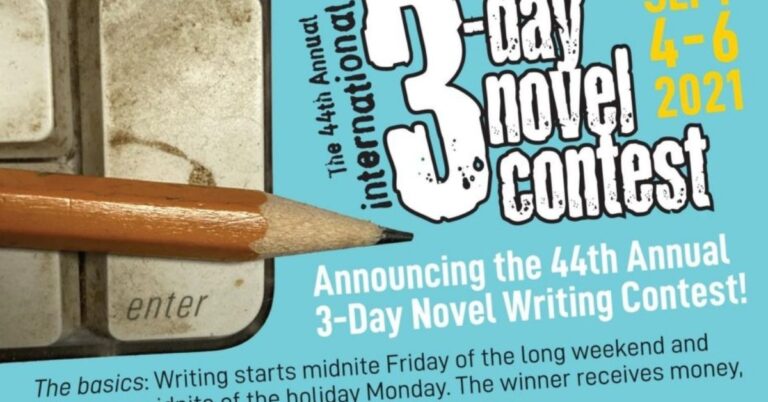
That crucible of invention known as the 3-Day Novel Contest takes place every Labor Day weekend. Billed as “The World’s Most Notorious Writing Contest,” it originated back in the dawn of time, aka the late 1970s. Read the story of its birth here. My 3-Day Story: I entered the 3-Day Novel Contest in 1989, when I …

Read more

How to Run Your Writing Group

There is nothing so precious and productive as a good writing group. Why? It gives a writer: If you have not belonged to a writing group and are wondering what happens, read on. The Red Notebook Society The writing group I most recently belonged to (for fifteen years or so), is a highly secretive coterie known as …

Read more

How to Write a Manifesto

In an hour

Manifestos are an excellent tool for getting clarity about your life, or about a particular aspect of your life…like writing. Writing a manifesto reminds you a) your experience is valid, and b) if you don’t know where you stand on something that matters urgently to you, how can anyone else?

What’s a manifesto, and why would you want one?

A manifesto states your beliefs about something. The US Declaration of Independence is a type of manifesto, and so is the aptly named Communist Manifesto. It can be long or short. It’s both personal and public.

A personal manifesto is not about the rest of your life, or about what happened before. It’s about right now.

The website 1000manifestos.com has examples of manifestos ranging from Martin Luther King’s I have a dream speech to actor Charlie Sheen’s 11-point “life manifesto” (which might be a joke) to Albert Einstein and Bertrand Russell’s dead serious “Notice to the world,” advocating the end of nuclear weapons and starkly defining the choice facing humanity: renounce war or become extinct.

Writing a personal manifesto can clarify your “why,” that essential first step to being able to carry through any long endeavor, like writing a book or founding a business or living a meaningful life.

Since this is a blog for writers, let’s look at some of the main issues writers face, where having a manifesto can help. Every writer I know has flailed around from time to time, having trouble with any or all of the following:

  • Deciding what to write
  • Mustering the impetus to start
  • Deciding what form your creation should take (length, structure, etc.)
  • Making time to work on it
  • Getting to work when you sit down to write
  • Stopping before you reach the point of diminishing returns
  • Dealing with burnout from trying to write and work your day job and do other stuff
  • Creating and maintaining momentum until you have a complete draft
  • Revising that draft to bring it up to publishable quality

These are not small issues. In fact they probably make up a large part of what stops people from finishing books, stories, blog posts, screenplays, poems—you name it, writers have gotten bogged down on it.

A writing manifesto can be extremely helpful when you’re doubting yourself and doubting this writing thing. When you’re thinking that the time on energy you spend on writing could be better spent on other things, like your job or your friendships or your partner and kids, or your financial and emotional survival. Or when you need some courage to get back into the manuscript that’s turned into a bloodbath of bad decisions.

Why write a manifesto now?

Now is a good time for manifestos. The world is a volatile place. We need to remember who we are and what matters to us.

So if you’ve realized lately that you’ve been blindly striving in the cult of productivity, or been passive when you should have acted, or let bigotry and systemic inequity go unchallenged, writing a manifesto can give you a north star to guide your daily life.

Also, if not now, when? The idea that we’re going to live to old age is just an idea. If you’re stuck on something that feels integral to your well-being, as writing does for most writers, then you need to sort that out now, not five years from now.

Knowing where you stand on something that matters to you is the first and most essential step for engaging with that thing successfully.

Nobody else’s manifesto can be your manifesto, because nobody else is living your life.

Three steps to your manifesto:

You’ll need 40 minutes, paper, pen, scissors, and tape or glue. You will break your 40 minutes into three phases:

  • Phase One: thinking (10 minutes)
  • Phase Two: writing (20 minutes)
  • Phase Three: revising (10 minutes)

You will employ restrictions to produce a draft in a limited time, which is what writing always comes down to.

First restriction:

The manifesto form itself. Make it a short one. You’re aiming for ten to twenty declarative sentences in a particular order that flows well and makes sense. A declarative sentence is something like: “Walking is never a waste of time.” Or (from The Typewriter Revolution Manifesto) “We affirm the written word and written thought against multimedia, multitasking, and the meme.” Look at some of the manifestos on 1000manifestos.com to get a sense of the variety and scope short manifestos can have.

Second restriction:

The time frame (forty minutes). Ten minutes to think, twenty minutes to write, ten minutes to revise. Between the phase two (writing) and phase three (revision), you can put it away for a day or two if you like, but you don’t have to.

Third restriction:

Make this manifesto a collaboration between you now, the age you are, and yourself as a kid. Pick an age when you knew what you liked doing and saw no reason why you shouldn’t do it. Good ages might be seven, ten, or twelve, but any age could work. Think about what mattered to you at that age. What did you know or see clearly about the world and yourself that you were talked out of, somehow, as your life progressed?

Fourth restriction (optional but potentially lifesaving):

Pick five words at random from the nearest book, sign, or website and write them down.

1.         Begin Phase One—Thinking

Set a timer for 10 minutes. Brainstorm / bullet point a list of your values, thoughts, and passions around your writing life or the topic of your manifesto. This is mostly thinking, though it does involve writing down your thoughts. But it’s generative writing–brainstorming. You are not censoring yourself or trying to make sense. There is no idea too stupid. There is nothing too ‘out there.’ Take dictation from your child self and your now self. Maybe as a kid you liked stories about dragons. Write “Stories about dragons are cool.” Just open the channel and take whatever comes through. When the timer goes, STOP. You can take a short break or go straight to phase two.

2.         Begin Phase Two—Writing

Set a timer for 20 minutes. Focus on what this manifesto is about (i.e., your writing life). Use your bullet points from Phase One and write complete sentences on a piece of paper, leaving half an inch or so of white space between each sentence. When you write these complete sentences, focus on the now. It can be tempting to write something like: “I will finish my novel this year.” But that’s not a manifesto sentence. A manifesto sentence is more like, “My novel matters more to me than my job.” That doesn’t mean you’ll quit your job to write the novel, it means that when you need to choose between really killing it at work and perhaps easing off so you can leave on time, you’ll choose to leave on time.

If you are having trouble starting a sentence, use one of the five random words you culled in the preparation phase. Anyone can make a sentence if they are given a word, and you will be surprised at how interesting those sentences can be. Or if your Phase One points need fleshed out, think about your Who, Why, and What. Who are you? Why does writing matter to you? What do you know works, or used to work, in your writing life?

It’s just a draft.

Remember, they don’t have to be good sentences. Put them on the page any old how. It’s a draft.

Once you have your sentences written down, cut up the piece of paper so that each sentence is on its own strip. Lay the strips of paper on a flat surface and move them around, aiming for a good flow and progression—from the small to the large, from the particular to the universal, from the fact to the opinion flowing from that fact, from the child to the person you are now.

When the timer goes, stop moving the strips around. Type or write the sentences out a second time, in the new order. If you’re using a computer, print it out.

Optional: You can put the sheet of paper in a drawer and leave it alone for a couple of days, or you can proceed to the Revision phase. I like to give drafts a rest because it’s a simple way to create distance and avoid unnecessary tinkering. But if you like your sentences the way they are and want to keep going, begin phase three.

3.         Begin Phase Three—Revision

Set a timer for 10 minutes. Read your manifesto. If it feels right to you, write “My Writing Manifesto” or “My 2021 Manifesto” on the top and stick it somewhere you’ll see it on a regular basis. If it doesn’t feel right yet, work on it for ten minutes. Reorder, polish, cut, or add sentences. Don’t try to change it too much, just give it a fluff and fold, as they say in the laundry business.

When the timer goes, stop and call it done.

Now you have a manifesto.

It probably won’t be perfect, but you might find it surprisingly helpful when you need some perspective on your writing life, or need to make a decision about what to do with your life in general.

What to do with your manifesto:

  • Look at it regularly
  • Whenever someone gets in your way around writing or around your personal boundaries & convictions, take it out and speak the sentences to them in a powerful voice. You and they will know exactly where you stand.
Take an hour and write your manifesto today.


Book Review: Quiet by Susan Cain

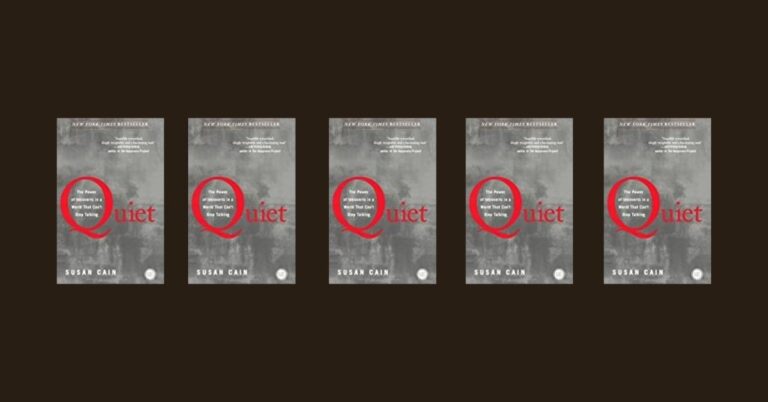
Quiet: The Power of Introverts in a World That Can’t Stop Talking, by Susan Cain Tidbits from Quiet: Open plan offices reduce productivity and impair memory. They make people sick, hostile, unmotivated and insecure. Online collaborations can be very successful, but that doesn’t mean work groups are better in all situations. Your sweet spot is …

Read more

How to Write More by Starting Small

There’s a meme on that social media platform old people use (Facebook), which goes like this: You might be a binge-writer, or you might be more of a steady plodder. As someone who writes both ways, I have discovered that each approach involves starting small. Q: What’s wrong with starting big? A: It makes things …

Read more