
I am messing around with the opening of my current novel (I have 8,000 words or so, but I wouldn’t call any of them useable yet, haha!).
Wish I could tell you what the novel’s about, assuming you’re curious! Not just for fun, but because it’s good practice to write or speak what you’re working on. You need to be able to describe it to other people, including “gatekeepers” like agents and acquisitions editors, but also to people at parties or anyone with the delightful attribute of curiosity.
So here’s Johnny to explain my current novel: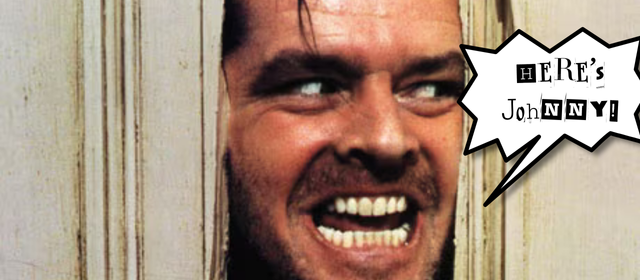
Pat’s work in progress is a reinvention of the Frankenstein myth as expressed via the story of a desperate woman who realizes she’s gradually gotten used to living a life she can’t stand. She sets out to reinvent herself (so in that way, she’s both scientist and monster).
What’s missing from this explanation, aside from clarity?
Location. Setting and how it interacts with character. There’s a hint in “heinous world,” but it’s vague.
To go back to Johnny, aka Jack Torrance, his story (The Shining) could have taken place only in the Overlook hotel. It’s so important that the hotel’s on the cover of the book’s 1977 hardcover edition:
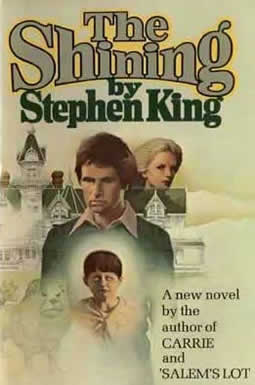
My point is that I’m very curious about how characterization riffs off location. Specifically, about where writers put their POV characters for their first scene, and why that location.
Every word of a novel’s opening needs to pull a huge amount of weight, and your choice of location will naturally matter.
Places have their own language. Right now, in the start of the rainy season, my home town of Vancouver is speaking to me with incredible precision. Despite changes in the climate from global warming there’s still a buttload of rain, and my walks through the city are redolent with a lifetime of associations.
I’m of the opinion that fiction that ignores place is missing a big opportunity, and that it behooves us to be deliberate about what we do in a story’s opening.
Since I haven’t written the novel’s opening yet, I’m now looking at where other books open, in terms of place, and how the location interacts with POV. (I was taught many years ago that how someone sees a place is directly related to their interior landscape — an escapee will see boltholes and dark alleys, whereas a newlywed might see, erm, hotel rooms with pretty curtains, or other couples in love.)
Side note: pay attention to your subconscious in this regard. There’s more driving your behavior than conscious thought.
An example: This morning I was in a silent writing session run by the London Writers Salon (which is an excellent way to get some writing done). A few cells below me, a guy named Silvano Stagni caught my eye. I don’t know why. I Googled him while the group was still gathering.
About a minute later, while I was glancing between the Zoom screen on my laptop and the Google results on my desktop screen, the session leader called on one of the writers to read that day’s inspiration (a short passage about writing or life).
Guess who she called on? Silvano Stagni!!!
I had no way of knowing this was going to happen. Did he know? Was he carrying a subtle air of expectation that made me notice him in the first place?
While he read the passage, I clicked on one of the Google results for Mr. Stagni.This link took me to his Substack, whose most recent essay (published yesterday!) is entitled “Can a City or an Object be a Character in a Story?”
YES, SILVANO, YES!!! And thank you for writing about it!
How do you choose where to set your book?
Well, sometimes the choice is made for you by who’s in the scene.
Or as in the case of Paul Auster’s New York Trilogy, City of Glass, the location is a guiding presence–New York City being portrayed as full of people observing each other while others are oblivious, and in either case, the people are unable to penetrate the reality of the people they see every day.
In the Vera Stanhope books by Ann Cleeves, the settings of Northeast England (Northumberland and Newcastle) often create the plot, whether it be about birders or sex workers.
Update from 2026: I’m writing the novel in a more focused way now, and it turns out the first scene is set in a Catholic church in the lower mainland of British Columbia, and that setting has so many echoes through time and space that it gives me a ridiculous amount of material to work with.
Cheers,
Pat

On the podcast TOMORROW, we discuss:
- learning how to talk about what you do in a way that’s both persuasive and true,
- which can sometimes mean appealing to a gatekeeper so you get the opportunity to reach a wider audience, &
- how authenticity leads to specificity.
Visit giftedunderachievers.substack.com to subscribe, or look for us on Spotify, Apple, or wherever you get your podcasts.
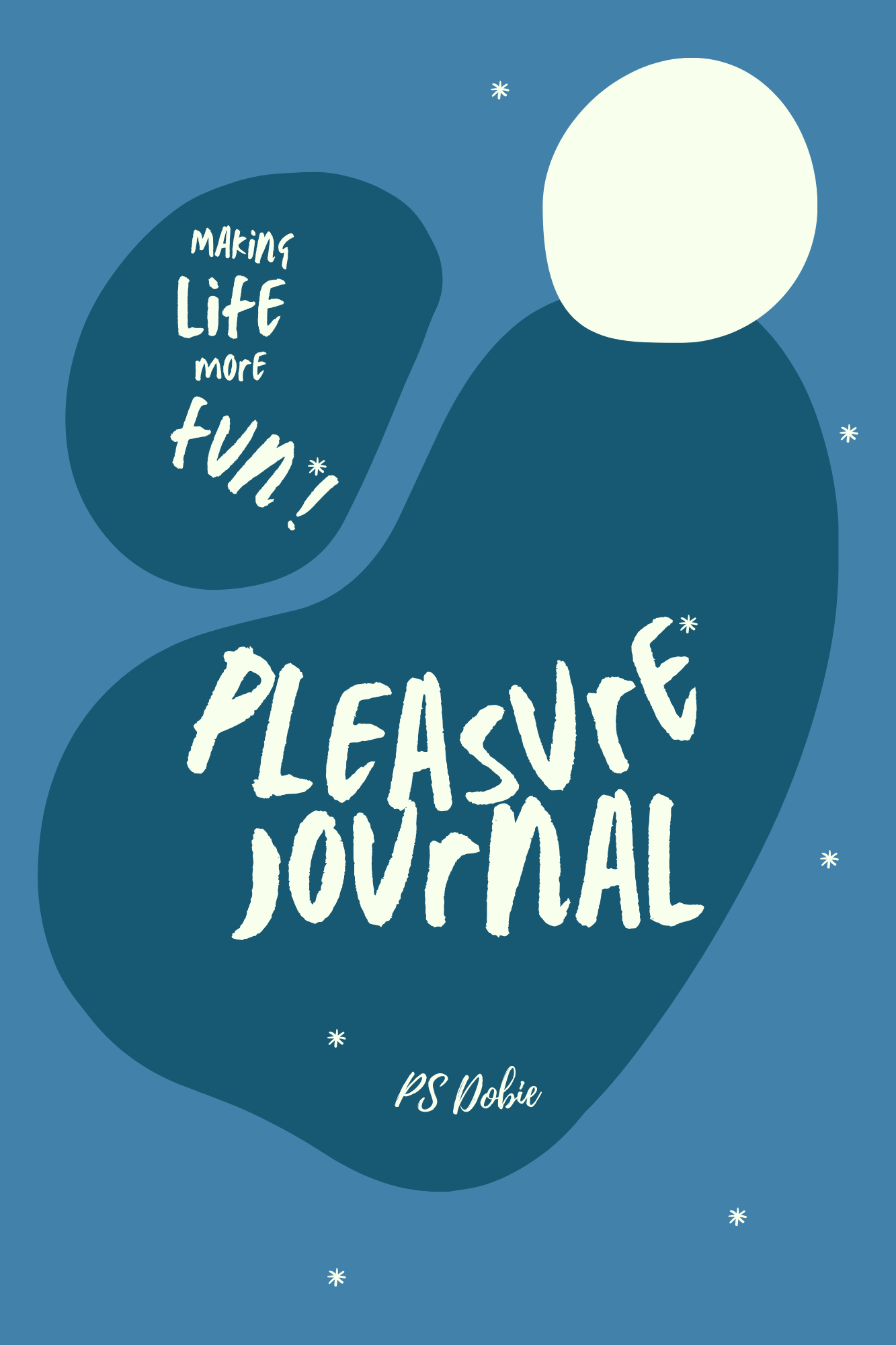
I published a guided journal in 2022 and 2023. Turns out I made it a bit TOO COMPLICATED. The diary format filled me with guilt if I missed a week. OK, not true–I didn’t feel guilty, but I didn’t use it either.
This year I revamped the whole thing without dates and with more room for doodles. I lurv it. I think it’s cute.
If you’re looking for a gift to cheer up yourself or someone else, here’s a link to the new and improved Pleasure Journal. My next step, for obvious reasons: get it printed elsewhere!
If you’re having any trouble focusing as we zoom toward the silly season, might I suggest taking part in a silent coworking group.
Here’s a blog post with links to the (mostly) silent writing groups I tried out and liked.
Book Bag
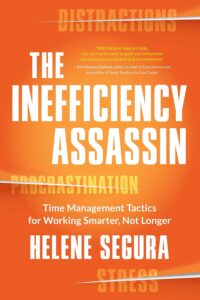
The Inefficiency Assassin: Time Management Tactics for Working Smarter, Not Longer
by Helene Segura
2016, New World Library
Excellent book. It got me excited about time blocking again, which is something I’ve been doing for DECADES but abandoned during the summer of 2024, to my detriment. Some crazy lists and acronyms, but lots of stories and fun to read.