
Quote attributed to either John F Kennedy (1917-1963) or Gail Devers (1966-).
In the last Postcard I was all over the idea of having a creative ecosystem for yourself, so you can make the thing you want to make.
Brace yourself for some possibly weird suggestions on how to set one up!
Personally, I used to think sheer doggedness would help me write novels. Up at five, a couple of hours trying to learn to write a novel by writing a novel, then off to work five days a week.
It did work, though the novels were abysmal due to lack of skill. But it took a lot out of me.
It was time to think bigger–as in, bigger than my own willpower and drive.
With every writing project you’re the guinea pig, you’re the human subject, and you’re the person most interested in your ability to make what you want, finish what you’re making, and get it out there into the world.
I believe that this ability can be SUPERCHARGED, and that’s what this edition of Pat’s Postcard is all about.

How to Build Your Creative Ecosystem
Four Principles (each with an adverb!!!)
1. Ingeniously managing your inputs
2. Ruthlessly managing your outputs
3. Frequently moving your ass and other body parts
4. Consistently trusting yourself
1. Ingeniously managing your inputs
By inputs I mean the things you’re surrounding by–books, TV, people, environments. Anything you do or see on the regular could be considered an input (or an output, depending).
I can more or less control my work and home environments, because I work alone and my kids are young adults who are, you know, not didactic about how things look around here.
So managing my inputs is more about making better choices with how I spend time:
- Reading books that expand my mind vs shrink it. This is a very personal thing. I love the nitty gritty of all kinds of topics and stories, so by ‘expand’ vs ‘shrink’ I don’t mean content so much as style or approach. Case in point: the Inspector Maigret novels by George Simenon. They’re short, tight, and kind of bleak, but reading them expands my mind.
- Watching TV that inspires me vs TV that makes me lock the doors. I’m a huge crime show fan. I also love crime documentaries. But too much of this gives me a one-track mind. The TV input that works in my ecosystem morphs and changes, but right now it’s this YouTube channel about writers called Author Documentaries
- Hanging with people who energize vs. those who vampirize. I think we all know people who take up a lot of space / air / energy. I try to recognize and avoid people like that. Sometimes I forget, and it saps my energy or gets demoralizing.
- Tweaking my environment. I’ve been reading Donald Rattner’s book My Creative Space (thanks to the amazing Carrie McConkey for the recommendation) and I’m taking his advice on a number of fronts, like trying to be around views or images of views (apparently they are equally effective), looking at lightbulb images (really), working near objects with some kind of organic or handmade aspect, etc. Rattner has 48 science-based suggestions for building a creative environment. The book’s easy reading with lots of photos.
2. Ruthlessly managing your outputs
Your outputs are things like going to social events and being with people (see #1). They can also be things like managing deadlines and scheduling your day job and other projects.
I’m not so good at this part, but here’s the plan:
- underscheduling my work this summer so I have time to write
- underscheduling my weekends so I have time to cook and read and do laundry
- keeping on top of my personal and work projects so they don’t become a burden of unmet goals
- prioritizing the projects and finishing them one at a time–20 hours on two projects will get you farther than 20 hours on 10 projects.
3. Frequently moving your ass and other body parts
We don’t all have the privilege of being able to move around. However, if you do, then take advantage of it. Exercise has been shown to increase blood flow to the brain, make us more productive, and raise our mood. I’m lucky in that, although my job requires long bouts of sitting in front of a computer screen, I have all my limbs and I’m weirdly tough.
So the plan here is:
- moving my ass even when it’s inconvenient and I don’t feel like it. I like a 45-minute walk because I can find the time and it doesn’t interrupt my day too much, plus it helps me think.
- long bouts of sitting wrecks my back and hips, and doing some kind of stretching daily really helps. I like the adorable Mady Morrison from Germany (on YouTube). This is the 15-minute stretch I’m addicted to.
- if you think for a living, some kind of meditative movement is good. I like the beautiful Marisa from Yoqi (here’s the one I’d start with, if you’re new to qi gong. This one is also great).
4. Consistently trusting yourself
Sometimes if you’ve been struggling with a writing project, completing unrelated challenges or chores can also help. Up here in Vancouver, it’s now against the law to wash your car on the street, which is probably a good thing…one year I watched a guy across the street wash his car EVERY DAY during the infamous heat dome, while the wildfires raged across BC.
Since then I have moved to a condo and my car got dirtier and dirtier to the point where I felt mildly ashamed every time I drove it.
But last Sunday my pottery class didn’t happen, so I had time. Actually going to a car wash and spending 5 minutes and $17.95 on the Gold treatment made a world of difference to how I felt about myself. Who knew?!
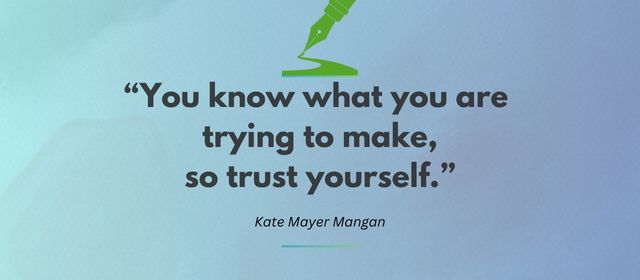
Back to writing. The quote below comes from a fellow member of Pam Bustin‘s writing group, the brilliant Kate Mayer Mangan.
Cheers,
Pat
You Are Invited!
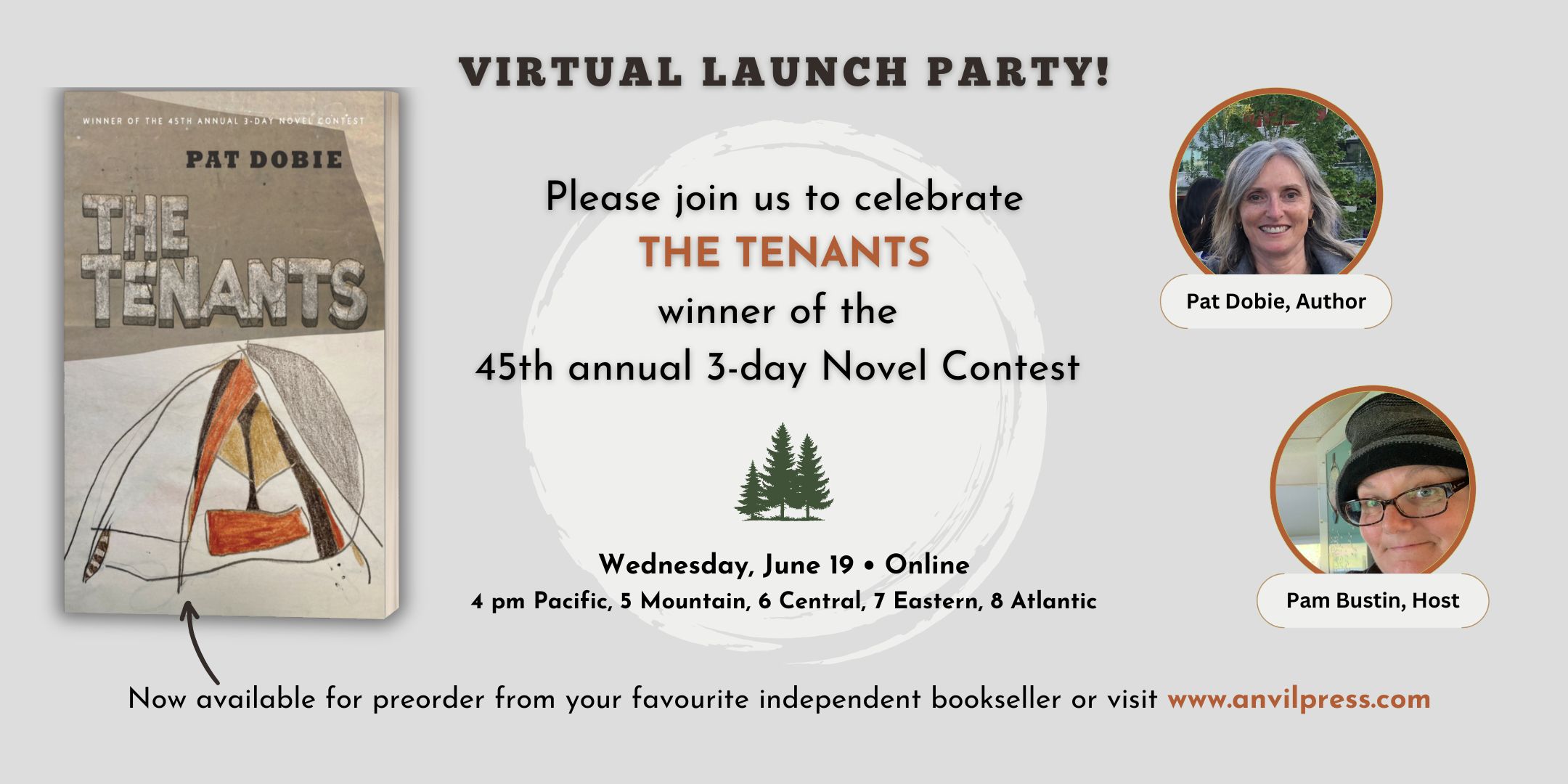
The Tenants is coming out VERY SOON. This novel is about as weird as you’d expect. If you’re already coming to one of the launch events, YAAAYYYYY! If not, below is a link to get a seat at the online party on June 19! I would love it if you’d join us for this hour-long bash. We’ll have a prize draw, a reading, a short and lively chit-chat about the book and the writing life, and a Q&A about what it’s like to write a novel in three days. Don’t miss out on the fun – mark your calendars and claim your seat today!
Update: The virtual launch was a gas. Missed it! Click here to watch the replay! (Just scroll down)
I started a new novel. Long story. Ha ha! Actually, I hope the novel will be short. But why I started a new one is a long story. I was over 50,000 words into a novel that was sapping my soul. I’ve only quit a novel once before, so this was hard, but I forced myself to end the masochistic behavior and it’s a lot more fun to write what I want to write.
Right now I’m thinking, cogitating, drifting, staring, and doing some light scribbling. This is why I’m changing my ecosystem.
Book Bag
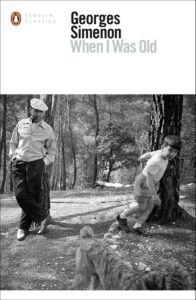
When I was Old, by Georges Simenon, translated by Helen Eustis (Penguin Publishing Group, 2016)
Having recently plowed through Simenon’s biography by Patrick Marnham, I read one of his Maigret novels and also got hold of this translation of the journals he kept in his late 50s. So full of interesting observations, baldly egotistical, addictive reading. The purest expression of Simenon is probably in his novels, but these journals show the mess behind the scenes, which is fun to read.